

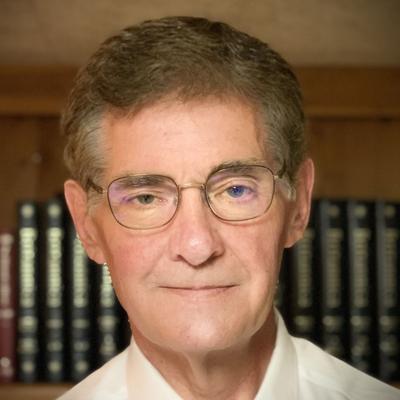

There are many reasons to love Idaho. For conservatives, a high mark was the retirement of Frank Church, powerful Senate Foreign Relations chairman, Democratic presidential contender, replaced by Steve Symms, apple-grower from Caldwell.
Symms was as unlike Frank Church as a person could get. Church was a creature of “the Swamp,” at ease among the elite of Washington, D.C. Symms was at his best among factory workers, truckers, loggers and farmers.
Symms’ mentors included the irascible Ralph Smeed, libertarian and philanthropist who founded the Center for the Study of Market Alternatives in Caldwell. Smeed was behind some of Symms’ most famous demonstrations. Like his staging a race between the U.S. Post Office and a relay team of letter carriers on horseback. The point? Government monopolies should be challenged, otherwise they give us mediocre service at increasingly high prices.
Some today say Sen. Symms was an imperfect man. They didn’t like how he ate popcorn, for instance. Or were offended at an “off-color” joke he told. An honest spirit and imperfect humanity can reside together. Such was the case with Symms.
But he was no hypocrite. He didn’t desire a cult of personality. In fact, he despised them. He admired Ronald Reagan’s ideals but didn’t deify the man. That is how Symms convinced Reagan to scrap the 55-mile-per-hour national speed limit. He simply asked Reagan to be Reagan, posing the question “What is the federal government doing setting speed limits in Nampa, Idaho?”
“Big people discuss ideas. Small people discuss people.” Symms would say. For that he’d likely be classified a RINO in today’s Idaho GOP.
Symms was continuously at the right edge of the spectrum in the United States Senate. He had a consistent American Conservative Union rating at or near 100 percent, was a darling of the Heritage Foundation and solidly anchored the conservative Senate Steering Committee.
Washington, D.C.’s liberal establishment similarly rated Symms, minus the praise. Hundreds of lobbyists dependent on government funding howled when he assumed chairmanship of the Senate Budget Committee. To them it was the “end of the world.”
And it could have been, if only Symms had more votes at his side. He would propose a balanced budget only to have his own fellow Republicans vote down his spending limits. Symms often stood alone in his crusade to “take a bite out of government.”
Democrats condemned his slogan that “freedom has always come from a box. If not the ballot box, and not the jury box, then at last resort, the cartridge box.” Liberals misunderstood that he used that phrase to advocate engagement in political and legal processes, noting that “we’re still far from resorting to the cartridge box.”
Yet, as that last defense, the second amendment was sacred to the senator. In a move some called political suicide, and others hail among the Senate’s most courageous, Symms waged a one-man war against the federal government banning ammunition, the armor-piercing “Cop-Killer” bullet bill. Symms schooled his Senate colleagues in how ballistic physics worked, how hardened metal was sometimes needed and how a bullet made of wood, with the right force and velocity, could penetrate Kevlar.
In the end, the bill passed 99 to 1. Only Symms voted against outlawing ammunition “to stop officer fatalities,” signed into law in 1986, a year that saw 181 police officers killed in the line of duty. The most recent statistics for 2021 peg that same number at 623.
On Monday, Aug. 7, Steven D. Symms stared down at his headstone in Caldwell’s Canyon Hills Cemetery, where he buried the ashes of his dear Loretta, wife and companion of 40-plus years. “My name is there, but I’m not ready to call it quits right yet,” he said.
Engraved on the headstone’s reverse were the words “Yours for a free society.”
That is Steve Symms. A fighter to the end.

(0) comments
Welcome to the discussion.
Log In